As autumn leaves blanket lawns and sidewalks, many residents look to their local government for seasonal cleanup assistance. Municipal leaf collection is a common service, but programs operate under specific rules that can vary significantly from one town to the next. Generally, cities use one of two primary methods: collecting loose leaves raked to the curb or picking up leaves that have been placed in bags or containers. Understanding which system your city uses and following its guidelines is essential for a smooth and successful pickup.
Understanding Municipal Leaf Collection Programs
Most municipal leaf collection programs are seasonal, often running from October through November. During this period, dedicated crews make several passes through residential neighborhoods on a set schedule. For example, the city of Charlottesville, Virginia, provides up to three curbside collections for loose leaves per season. To manage this large-scale effort, cities frequently divide their territory into zones, with each zone assigned specific collection weeks. Washington, D.C.'s Department of Public Works (DPW) provides a detailed online schedule for each ward and encourages residents to find their collection week by entering their address on the city's website.
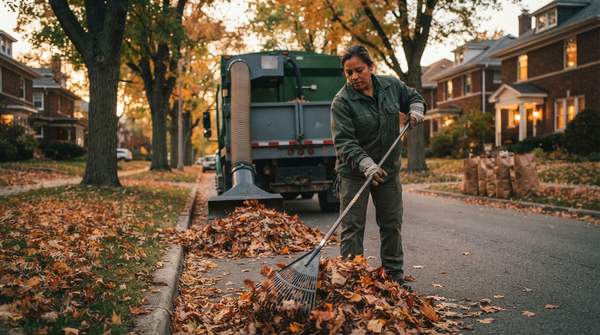
The two main approaches are loose-leaf collection and containerized collection. In a loose-leaf system, residents rake leaves into piles in a designated area, typically on the grass strip between the sidewalk and the street. In a containerized system, residents must place leaves in approved paper bags or special green organics bins. The City of Milwaukee offers both options to its residents during its collection window from October 1 to November 15. Regardless of the method, the goal is often to compost the collected leaves, which is why strict rules about contaminants are always in place.
Loose-Leaf Curbside Piles: What to Know
If your city uses a loose-leaf collection system, your main task is to rake your leaves to the designated spot before the scheduled pickup day. In Washington, D.C., residents are advised to rake leaves to the curb or into the tree box on the Sunday before their collection week begins. It is crucial to keep these piles free of contaminants. According to D.C.'s DPW, items like bottles, cans, and other debris can damage collection equipment. Similarly, Milwaukee prohibits mixing leaves with plastic bags, brush, or garden debris.
Placement is also critical. Piles should be kept away from obstacles to allow collection crews easy access. Common guidelines instruct residents to keep leaf piles away from storm drains, mailboxes, fire hydrants, and parked cars. Raking leaves directly into the street is often prohibited because it can create traffic hazards and block drainage, though some municipalities, like Milwaukee, explicitly permit it during the collection season. Always check your local rules to confirm the correct placement.