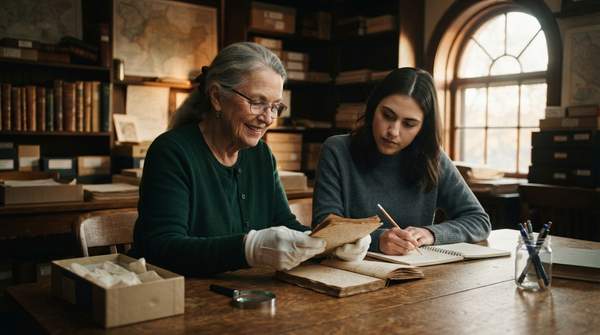
Local historical societies serve as vital custodians of community memory, diligently researching, preserving, and making accessible the rich tapestry of neighborhood histories. These organizations play a crucial role in documenting the past, from collecting tangible artifacts and archival records to gathering personal stories, ensuring that the unique heritage of a place endures for future generations. Residents can actively engage with these resources, both by accessing extensive collections for their own research and by contributing their personal historical records to enrich the collective understanding of local life.
The Role of Local Historical Societies in Preserving Community History
Local historical societies are primarily dedicated to preserving and interpreting the history of a specific place or community Historical Text Archive. While their functions may overlap with those of archives, libraries, and museums, each type of institution often has a distinct emphasis. An archive typically focuses on preserving records and collections with structured access, a library organizes published and research materials, and a museum interprets physical objects through exhibitions Historical Text Archive. However, many libraries maintain special collections of manuscripts, photographs, and local history materials, and museums may also hold archives Historical Text Archive.
What sets historical societies apart is their deep connection to local life. They often collect evidence that might never be described in national catalogs, such as photograph albums, store ledgers, club minutes, correspondence, scrapbooks, school yearbooks, funeral cards, and unpublished manuscripts donated by residents Historical Text Archive. Volunteers within these societies may dedicate years to indexing obituaries, recording cemetery inscriptions, identifying individuals in old photographs, or documenting buildings that no longer exist Historical Text Archive. This grassroots effort ensures that the nuanced details of a community's past are not lost. Beyond documents, historical societies also undertake artifact preservation, carefully cataloging and maintaining physical objects under appropriate environmental controls to ensure their long-term stability and accessibility for future study and exhibition.Archival Research: Unearthing the Past
Historical societies engage in extensive archival research, meticulously collecting and preserving a diverse array of materials that illuminate local history. Their collections often include family files, photographs, cemetery surveys, and records from local businesses Historical Text Archive. Beyond these, they typically house manuscripts, maps, local newspapers, and various artifacts Missouri Preservation. These resources provide invaluable insights into the physical environment and the lives of people within a community Xavier University Library.
Many societies also maintain special collections of biographies, local histories, and genealogies Library of Congress. For instance, the Missouri Historical Society boasts a vast collection of books, periodicals, photographs, and documents, alongside one of the Midwest's largest media collections. These materials allow researchers to delve into the experiences of past residents, understand community networks, and trace the evolution of neighborhoods. The scope of these collections can vary, so researchers are encouraged to review specific collection descriptions and inquire about what each society preserves Historical Text Archive.
A crucial aspect of their research involves oral history collection. This process captures firsthand accounts, memories, and perspectives from community members, providing insights into what ancestors thought, valued, and experienced Neighbor History. These recorded interviews complement written records, offering a deeper, more personal understanding of historical events and daily life. Historical societies often conduct these interviews, preserving the audio or video recordings for future generations, ensuring that individual voices contribute to the collective narrative.Accessing Historical Society Collections
Accessing the rich collections of local historical societies is becoming increasingly convenient for researchers and curious residents alike. Many institutions have embraced digitization initiatives, making portions of their holdings available online Missouri Historical Society. To begin, researchers should visit the websites of local public libraries, museums, universities, and historical societies, often looking for "Collections" or "Research" tabs Xavier University Library. The Library of Congress, for example, provides state-specific guides that link to digital materials and external websites for local history and genealogy research, including pictorial collections.
For those preferring or requiring in-person research, historical societies typically offer on-site access to their special collections and provide staff assistance Missouri Historical Society. Local librarians can also be a valuable resource, offering guidance on nearby local history collections Library of Congress. When planning an in-person visit, it is advisable to contact the society beforehand to confirm current holdings and access policies Historical Text Archive.
Additionally, resources like Ancestry Library Edition, which includes over 1.5 billion names across more than 4,000 databases, can often be accessed on-site at public or academic libraries. This resource contains records such as U.S. Census data, military records, court documents, land and probate records, vital and church records, directories, and passenger lists Library of Congress. These diverse access points ensure that both digital and physical avenues are available for exploring local history.Contributing to Local History: Sharing Your Story and Records
Local historical societies thrive on community engagement and welcome contributions from residents eager to preserve their neighborhood's past. One of the most direct ways to contribute is by donating historical materials. Societies are often interested in old photographs, letters, diaries, and other documents that shed light on local history Historical Text Archive. These donations are crucial for enriching the understanding of local life and ensuring that personal perspectives are included in the historical record. When considering a donation, it's helpful to think about items that tell a story about your family, a local business, a community event, or the evolution of your neighborhood.
Beyond physical donations, residents can participate in projects that deepen the community's historical narrative. Historical societies frequently engage with family historians, seeking to understand not just what ancestors did, but also what they thought, valued, and experienced Neighbor History. This interaction creates opportunities for residents to share personal stories and family histories, which can be invaluable for "neighbor history" projects that explore the people, professions, and community networks surrounding an ancestor Neighbor History. Societies may even recruit family historians as members and volunteers to assist with research, transforming personal interest into a collective effort to uncover and preserve hidden community stories Neighbor History. By actively engaging with local historical societies—whether through research or contribution—residents play a vital role in safeguarding and celebrating the unique heritage of their neighborhoods.