Every building, street corner, and park in New York City holds a story. Uncovering this history doesn't require a professional degree, but rather a systematic approach and knowledge of the city's rich archival resources. By starting with broad questions and secondary sources before diving into specific primary documents, any resident can piece together the narrative of their neighborhood, discovering who built their home, who lived there before them, and how their block has transformed over the decades.
The key is to organize your research around specific goals. Whether you want to find a construction date, identify an architect, trace a building's ownership, or simply visualize what your street looked like a century ago, a structured plan will guide you to the right archives and the exact documents you need. This process turns a daunting task into a manageable and rewarding investigation into the layers of history right outside your door.
Starting Your Neighborhood History Journey in NYC
A successful research project begins with defining what you want to learn. Common goals include identifying a building's original owner and architect, finding its construction date, documenting who has lived there, and understanding the broader history of the neighborhood. According to guidance from the New York Public Library, you should first gather key data about your property, such as its address and any known historical details, which will help you navigate databases, maps, and other records.
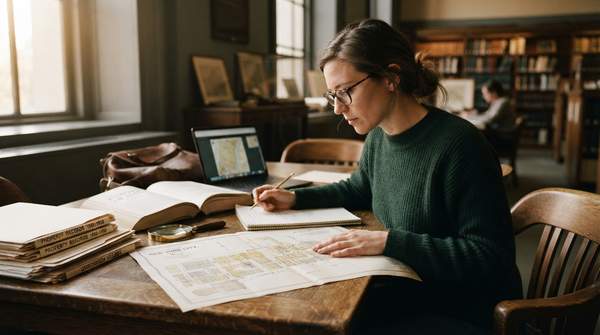
Experts suggest beginning with secondary sources, such as reference books and guidebooks, to build a foundational knowledge of your area. The New York Public Library's Milstein Division of U.S. History, Local History, and Genealogy holds many such resources. Consulting major works like the AIA Guide to New York City or Robert A. M. Stern’s New York series can provide essential context before you delve into primary-source research. This initial step helps you understand the major developments, architectural trends, and historical forces that shaped your community.
Key NYC Institutions for Historical Research
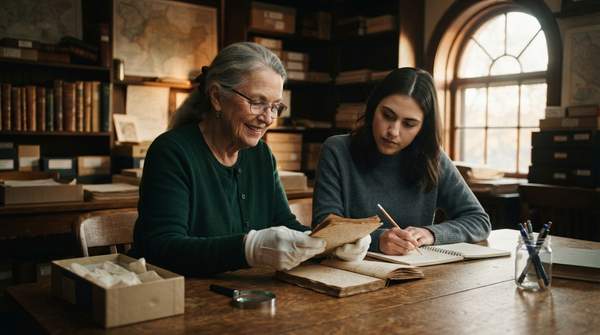
New York City is home to several world-class institutions that are essential for any neighborhood history project. The New York Public Library (NYPL) is a primary starting point, with its Irma and Paul Milstein Division offering extensive collections on New York City history, architecture, and genealogy. Librarians there can provide expert guidance on navigating city directories, historical photographs, and architectural drawings.
Another critical resource is the New York City Landmarks Preservation Commission (LPC). Established in 1965, the LPC designates and protects the city's significant buildings and historic districts. For any property or neighborhood with landmark status, the commission produces an official designation report detailing its "historical, architectural, and cultural significance," according to CUNY's City Tech library. These reports, available through the LPC, are invaluable summaries of a property's history. Local historical societies, such as the Queens Historical Society and the Bayside Historical Society, also maintain libraries and archives dedicated to their respective areas.