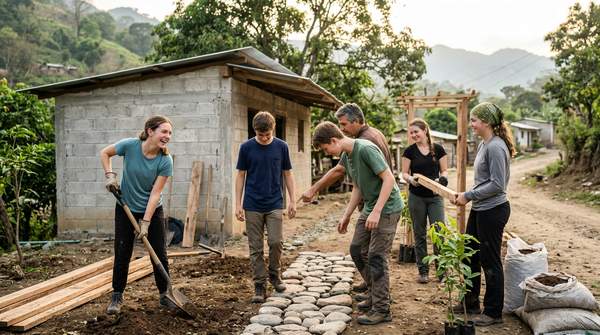
Planning a youth group mission trip is about much more than finding an available week on the church calendar. Thirst Missions helps churches, youth groups, and Christian schools create Christ-centered mission experiences where students can serve, build relationships, grow in faith, and experience ministry beyond their familiar surroundings.
Youth pastors and student ministry leaders are balancing budgets, transportation, parent questions, student expectations, ministry goals, and the practical realities of leading teenagers away from home. At the same time, they want the experience to be spiritually meaningful rather than simply another event on the summer schedule.
That is why the structure of a mission trip matters.
Students need opportunities to serve, but they also need relationships, spiritual reflection, cultural experiences, leadership opportunities, and enough structure to feel supported. Thirst Missions has spent nearly two decades creating mission experiences for churches and schools, with an emphasis on ministry, relationships, and organized support.
For 2027, the organization has expanded its youth-focused options with Youth Collective Mission Trips in Nashville and New Orleans, alongside its established private mission trips.
Students Need More Than a Service Project
A service project can be a great starting point, but students need context.
They should understand why they are serving, who they are serving alongside, and how their experience connects to their faith.
When students spend time with local ministry partners, participate in community outreach, worship together, and discuss what they are seeing, service becomes more than an assignment.
It becomes a learning experience.
Thirst Missions incorporates local ministry partnerships, cultural orientation, service opportunities, worship, and guided debriefs into its mission-trip structure.
That combination gives students space to connect what happens during the day with what they believe.
Students Need Real Relationships
Teenagers may not remember every project they complete.
They are more likely to remember people.
The friend who stayed up talking with them. The local ministry leader who shared a story. The child they met during an outreach activity. The church partner who welcomed the group. The team member who encouraged them when they were tired.
Relationships make an experience personal.
Thirst Missions' approach places strong emphasis on relational ministry, with trips designed to help groups build connections with local churches and communities.
For youth leaders, this is important because relationships often create the bridge between participation and transformation.
A student who feels connected is more likely to reflect on the experience.
Students Need Opportunities to Step Outside Their Comfort Zones
A mission trip should challenge students without leaving them unsupported.
That may mean trying unfamiliar food, meeting people from different backgrounds, serving in a new environment, leading part of a ministry activity, speaking to someone they have never met, or simply learning to function without the conveniences of home.
Those moments can become valuable lessons.
Students discover that they are capable of more than they thought.
They also discover that Christian community can extend beyond the people they see every Sunday.
International destinations such as Belize and Guatemala can provide cross-cultural experiences, while Alaska and Appalachia offer opportunities to serve communities within the United States. Puerto Rico provides another environment for ministry and cultural learning.
The point is not to make students uncomfortable for its own sake.
The point is to create an environment where they can grow.
Students Need Structure Without Feeling Controlled
Youth leaders know the challenge well.
Too little structure can create confusion. Too much structure can make students feel like they are simply following an itinerary.
The strongest trips find a balance.
Students should know where they need to be and what they are doing, while still having opportunities to ask questions, connect with others, explore their surroundings, and respond to what they are experiencing.
Thirst Missions provides groups with pre-trip consultation, participant materials, detailed itineraries, online trip information, ministry placements, on-site staff leadership, meals, lodging, and other logistical support depending on the trip.
That organization can make a major difference for youth leaders.
Instead of spending every moment managing transportation or figuring out the next activity, leaders can focus more directly on their students.
Students Need Space to Process What They Experience
A powerful mission experience can raise complicated questions.
Students may see poverty differently than they expected. They may encounter cultural practices that are unfamiliar. They may hear stories of hardship. They may discover that their assumptions about a community were incomplete.
Those experiences deserve conversation.
Debriefing gives students permission to ask questions and process what they saw rather than simply moving on to the next activity.
Thirst Missions includes guided debriefs and evening gatherings intended to connect real-life ministry experiences with faith, Scripture, culture, and honest discussion.
For youth leaders, these moments can become some of the most important parts of the week.
A student may not have an immediate answer to a difficult question. That is okay.
Growth often begins with learning how to ask better questions.
Students Need Mission Experiences That Fit Their World
Youth ministry is changing, and mission trips need to recognize that students have different expectations and interests.
That does not mean turning missions into entertainment.
It means understanding that students engage deeply when an experience combines purpose, community, and memorable moments.
This thinking is part of the rationale behind Thirst Missions' Youth Collective Mission Trips for 2027. The Nashville and New Orleans experiences were developed specifically for youth groups and Christian schools, combining daily ministry with community, spiritual growth, cultural experiences, and recreation.
In Nashville, students can participate in ministry and community outreach while experiencing the city's culture. New Orleans offers its own combination of service, local partnerships, outreach, and cultural experiences.
The objective is not to make missions less serious.
It is to create an environment in which students can participate fully.
Students Need to See That Missions Are About Partnership
One of the most valuable lessons a student can learn is that a mission team does not arrive somewhere as the hero.
The community already exists.
Local churches are already serving. Ministry leaders already know the people. Families already have stories, strengths, challenges, and traditions.
A visiting group comes alongside that existing work.
Thirst Missions emphasizes partnerships with local churches and ministries, helping visiting teams participate in ministry alongside people who know their communities.
That perspective can help students develop humility.
They are not simply going somewhere to "help people."
They are going somewhere to serve with people.
That distinction can influence how they understand missions long after the trip.
Parents Need Confidence in the Experience, Too
A youth group mission trip involves more than students and youth leaders.
Parents want to know what their children will be doing, where they will stay, who will be leading them, and how the experience is organized.
Clear communication and strong planning are therefore part of the mission experience.
Thirst Missions provides trip planning support, participant resources, staff leadership, lodging and meals, and detailed trip information as part of its different mission-trip options.
For churches, that support can make it easier to communicate the experience clearly to families before departure.
The Goal Is Not Just a Great Week
A successful youth mission trip should produce memories.
But it should produce something else, too.
Students should return home with a clearer understanding of service, a deeper appreciation for other people, stronger relationships with their church community, and a greater awareness of how faith can influence everyday life.
The experience should continue to matter after the bags are unpacked.
That is why the right mission trip requires thoughtful preparation.
Consider your students' ages and maturity. Think about their ministry gifts. Identify the kind of spiritual growth you hope to encourage. Choose a destination and format that fit your group. Look for meaningful local partnerships. Make sure the organization provides the level of logistical and leadership support your team needs.
Give Students an Experience Worth Carrying Home
The best youth group mission trips do not simply give teenagers something to do during summer break.
They give students an opportunity to see their faith in action.
They serve alongside other Christians. They meet people whose lives may look different from their own. They learn to listen. They discover new abilities. They face unfamiliar situations. They worship together. They ask difficult questions. They form relationships.
And sometimes, they discover that the people they thought they were going to serve have something to teach them.
That is the kind of experience Thirst Missions seeks to create through its Christ-centered mission trips.
Whether a group chooses a private mission trip in Alaska, Appalachia, Belize, Guatemala, or Puerto Rico, or explores the Youth Collective options in Nashville or New Orleans for 2027, the goal remains bigger than the destination.
It is about helping students put faith into action, experience meaningful relationships, and discover what it looks like to serve others with purpose.
For a youth ministry planning its next mission trip, that may be the most important destination of all.