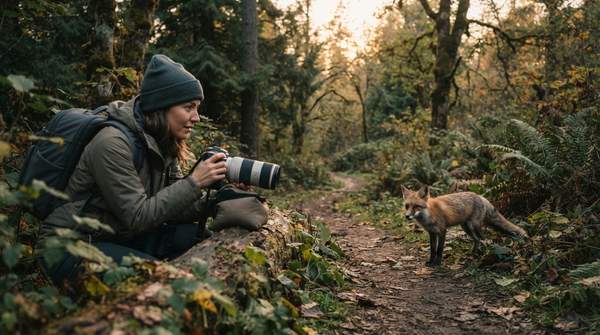
Urban parks and green spaces offer a remarkable opportunity to connect with nature and observe animals in their habitats. The unexpected sight of a deer at dusk or a hawk circling overhead can be a highlight of any day. This privilege, however, comes with a shared responsibility to ensure the safety of both people and the wildlife they encounter. According to the National Park Service, you are responsible not only for your own safety but for the safety of the animals as well. The foundation of every safe and rewarding wildlife interaction is respect.
By following a few key principles—maintaining a safe distance, never feeding the animals, and keeping pets under control—you can enjoy these moments while protecting the creatures that call these spaces home. The goal is to observe without disturbing, ensuring that wildlife remains wild for generations to come.
Your Urban Wildlife Viewing Checklist
To ensure a safe and respectful experience, authoritative sources like the National Park Service and Colorado Parks and Wildlife emphasize a consistent set of behaviors. This checklist synthesizes their core recommendations into a practical guide for your next park visit, helping you make responsible choices in the moment.
| Principle | Recommended Action | Reason and Guidance |
|---|---|---|
| Observe from a Distance | Do keep a significant and safe distance from all wildlife. | Getting too close can stress an animal, causing it to flee or act defensively. Use binoculars, a spotting scope, or a camera with a telephoto lens for a better view without disturbing them. |
| Never Feed Wildlife | Do not offer food of any kind to any wild animal. | Feeding wildlife is harmful to their health, alters their natural foraging behaviors, and can make them lose their natural fear of humans, which often leads to dangerous situations. |
| Control Your Pets | Do keep dogs leashed or under strict voice command at all times. | According to Colorado Parks and Wildlife, pets can chase, injure, or kill wildlife. Conversely, they can also be injured or killed if an animal perceives them as a threat or prey. |
| Watch for Animal Cues | Do pay attention to the animal's behavior and limit your viewing time if it appears stressed. | If an animal stops its normal activities, seems agitated, or watches you intently, you are too close. Respect their need for space and quiet, especially if they are resting. |
| Respond to an Approach | Do back away slowly if an animal approaches you. | While it may seem exciting, an animal approaching is not an invitation for interaction. The Friends of the Ridgefield National Wildlife Refuge note that it is your responsibility to maintain a safe distance. |
| Avoid Harassment | Do not chase, corner, or do anything that might force an animal to move. | Harassing wildlife is stressful for the animal and can lead to unpredictable and dangerous reactions. It is illegal in many parks to willfully disturb or displace an animal. |