Local cultural events do more than fill a calendar. According to the Fire For Effect Foundation, they foster a unique community identity, celebrate the character and heritage of an area, and cultivate pride among residents who invest time and energy in organizing and participating in them. The key mechanisms at work are heritage celebration, social interaction, and emotional attachment to place — and they can be observed in any town that gathers to honor what makes it distinct. A November weekend of programming in downtown Laredo, Texas, offers a concrete example of how these abstract dynamics become visible on the street.
Introduction: Celebrating Community Through Culture
Across neighborhoods and small towns, celebrations like heritage festivals, art walks, memorial walks, and seasonal fairs serve as the scaffolding of community life. The Museum at Hoppenville's community-event planning guide groups these under "cultural celebrations" and "educational events," noting that such gatherings are often designed to build community connections and support local businesses and artisans. Parades, cultural fairs, and exhibitions showcase a community's uniqueness and give residents a chance to share their histories, traditions, and achievements. What follows breaks down why those activities work, then applies that framework to one specific celebration.
What Is a "Sense of Place"?
In a heritage-conservation essay for the Global Development Research Center, Hari Srinivas describes a "sense of place" as something that develops among people with common ties to a location — residents of a neighborhood, or members of a cultural community. It is intertwined with emotional and symbolic associations: people form bonds with places that hold personal significance, evoke nostalgia, or elicit belonging, and locations can become symbols of identity, cultural heritage, or historical importance. Crucially, Srinivas argues that a sense of place can be fostered through social interaction and community engagement within a specific location. Cultural events are precisely that kind of engagement, concentrated into a shared occasion.
The Mechanisms of Community Building Through Events
The theory translates into identifiable parts. Heritage festivals and art walks reinforce cultural identity by putting a community's character on display. Markets and vendor stalls support local businesses and artisans, contributing to economic vitality — the American Planning Association notes that community events have a strong connection to local economic development when carefully co-located with permanent assets like small businesses and institutions. Participatory activities such as workshops, contests, and memorial walks foster social interaction and shared experience. Educational components like history tours and discussions invite residents to engage with their community's past and present. Each component activates a distinct mechanism; together, they compound.
Explanatory Model: How Cultural Events Build Community
The table below organizes these components into a reusable framework: identify an event's activities, then map each to the community-building mechanism it activates. The final column applies the model to Laredo's HOLA! programming, described below.
| Event Component / Activity | Community-Building Mechanism | HOLA! Laredo Example |
|---|---|---|
| Cultural showcases (heritage festivals, art walks) | Reinforcing cultural identity and sense of place | Caminarte art walk takes over downtown monthly |
| Local markets (artisan vendors, food trucks) | Supporting local economy and elevating local assets | Local artisan vendors and food trucks at the Catrina Festival |
| Shared activities (workshops, contests, memorial walks) | Fostering social interaction and community bonds | Crafting workshops; Best Dressed Catrín and Catrina contest; 2nd Annual Memorial Walk |
| Educational components (discussions, exhibitions) | Promoting cultural understanding and civic engagement | Poetry slams, community discussions, gallery exhibitions at the Border Heritage Museum |
HOLA! Laredo: A Model in Action
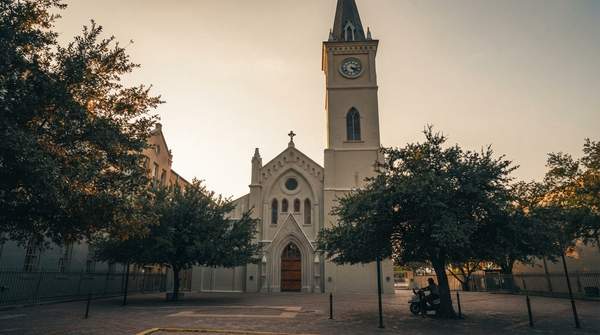
Downtown Laredo came alive over one November weekend with three days of art, history, and community celebrations, as reported by Hola Laredo staff coverage carried by KGNS. The festivities opened with RGISC's CompARTE Weekend, a multi-day initiative highlighting eleven of Laredo's historic inner-city neighborhoods through poetry slams, community discussions, and gallery exhibitions at Los Olvidados, Casa Ortiz, and the Border Heritage Museum. That single sentence contains the entire model: neighborhoods named and centered (identity), museums and historic homes as venues (symbolic associations), discussion formats (engagement), and exhibitions (heritage showcase).
The Friday Caminarte art walk then took over downtown, featuring an immersive exhibition and theatrical performance at Los Olvidados, pop culture art displayed at a local tavern, and hands-on crafting workshops hosted by named local makers on Zaragoza Street. The celebrations culminated Saturday with the 12th Annual Catrina Festival at the Pan American Courts Arts Complex on San Bernardo Avenue — a family-friendly evening running from 6:00 PM to midnight, with live music, food trucks, local artisan vendors, a Best Dressed Catrín and Catrina contest, and a 2nd Annual Memorial Walk. Read against the model, the festival bundles markets (economy), contests (shared participation), music (communal gathering), and a memorial walk (collective remembrance) into one event.
Beyond the Celebration: Lasting Impact
The Fire For Effect Foundation argues that the deeper value of local events lies in what happens after the crowds disperse. A vibrant events calendar can contribute to a culture of civic engagement in which residents actively participate in decision-making, because planning and executing events leaves people feeling empowered to voice opinions on community matters. Shared experiences, they write, "lay the groundwork for a more committed and engaged populace." They also caution that a single event sparks interest but ongoing programming is vital for long-term engagement — a point Laredo's monthly Caminarte and the Catrina Festival's twelfth year both quietly embody. The American Planning Association adds a broader frame: events tied to permanent community assets can connect celebration to durable local development, as in Athens, Georgia, where a farmer's market brings African American heritage to the forefront through recurring celebrations.
Fostering Vibrant Neighborhoods Through Cultural Celebrations
The decision for any community is whether to intentionally organize and support cultural events that feature heritage showcases, local markets, and shared participatory activities — because that combination is what strengthens identity, pride, and social bonds. Laredo's weekend demonstrates the pattern: historic neighborhoods celebrated by name, local artisans given stalls, residents invited into contests and memorial walks. The measure of success is observable rather than abstract: increased resident participation in local events and civic activities, alongside positive feedback from attendees and local businesses, signals that community building is working. A community wanting to test this can watch its own next festival for exactly those signs.
Sources
- Fire for Effect: Empowering Communities Through Events — Fire For Effect Foundation Inc
- How to Plan a Community Event: 8 Decisions in Order — Themuseumathoppenville
- A Sense of Place: Significance of Emotional Connections and Identity in Heritage Conservation — GDRC
- Encouraging Active Living Through Community Events — American Planning Association
- HOLA! Celebrating Laredo Culture — KGNS