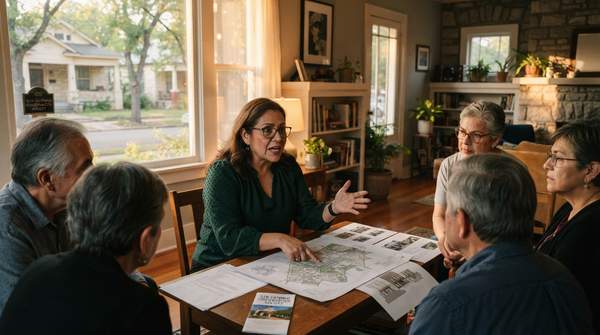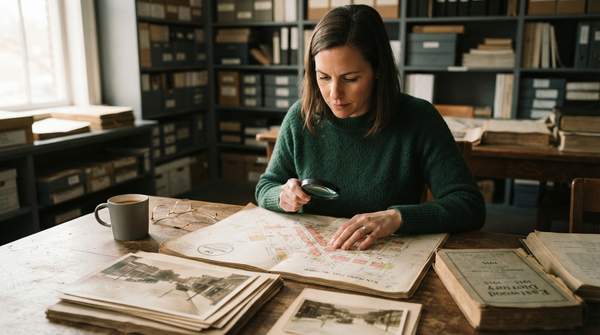
If you have ever wondered who lived in your house before you, what your street looked like fifty years ago, or how your neighborhood became the place it is today, the nearest local historical society is one of the most practical places to start looking. These organizations maintain collections of maps, photographs, city directories, oral histories, and personal papers that are directly useful for exactly this kind of research, and most also offer ways for residents to move from visitor to contributor.
The specifics vary from one society to another — no two collections are alike — but a consistent pattern emerges from what these organizations themselves describe. The Boca Raton Historical Society, for example, says its research library provides access to "an extensive range of primary and secondary sources — from historic photographs and handwritten diaries to maps, oral histories, and city directories." The Santa Barbara Public Library, cataloguing local historical and genealogical organizations, lists holdings that include photographs, ephemera, vital records, school yearbooks, historic maps, oral histories, and manuscript collections. Together, these descriptions sketch a reliable framework for what a resident can expect to find almost anywhere.
Key Archival Resources for Home and Community Research
The materials a local historical society keeps generally fall into a few recognizable categories, and each answers a different kind of question. Visual records — photographs, postcards, and sometimes films — document the past appearance of places and people. Maps and surveys show property boundaries, land use, and how streets and blocks changed over time. Directories and records — city directories, vital records, and business files — identify who lived or worked at a particular address in a given year. Oral histories and personal papers — recorded interviews, diaries, and correspondence — capture firsthand accounts of community life in a way official records cannot.
These categories come straight from the societies' own descriptions of their holdings. Santa Barbara's historical society collects photographs, files, maps, and ephemera spanning the Chumash, Mexican, Spanish, and American periods of the region. Its genealogical society holds books, periodicals, vital records, and local school yearbooks. The local Trust for Historic Preservation keeps books and scholarly articles, historic maps, oral histories, and photographs alongside manuscript collections such as the Pearl Chase Papers. Boca Raton's library adds handwritten diaries to the mix. A resident walking into almost any society's research library can reasonably expect to encounter some version of these materials, though completeness varies by time period and municipality.
Navigating Historical Society Resources for Your Research
The table below organizes the resource types described above into a practical guide. Use the right-hand column to match your own research question — "Who lived in my house?" or "What did my street look like?" — to the category most likely to answer it.
| Resource Category | Common Examples | Best For Answering... |
|---|---|---|
| Visual Records | Historic photographs, postcards, documentary images | "What did my street, building, or neighborhood look like in the past?" |
| Maps and Surveys | Historic maps, property surveys, planning documents | "How did property boundaries, land use, or street layouts change over time?" |
| Directories and Records | City directories, vital records, business files, school yearbooks | "Who lived at my address, and what businesses operated nearby?" |
| Oral Histories and Personal Papers | Recorded interviews, handwritten diaries, correspondence, manuscript collections | "What was daily life like here, according to people who experienced it?" |
Keep the qualifications in mind as you use it. Collections vary significantly from society to society, and the completeness of any record type depends on the time period and municipality. Oral histories and personal papers, in particular, offer qualitative insight and personal narrative rather than exhaustive factual coverage.
A Step-by-Step Approach to Researching Your Home's History
Because these resource categories answer different questions, they work best in sequence rather than all at once. A practical order, built from the materials societies themselves describe, looks like this:
- Start with maps. Historic maps and surveys show your property's boundaries and how the land around it was used, giving you a physical baseline before you look for names and faces.
- Search the directories. City directories list residents and businesses by address and year. Working through them chronologically lets you build a roster of past occupants of your home.
- Chase those names into the records. Vital records and genealogical holdings, like the yearbook and periodical collections at Santa Barbara's genealogical society, can add biographical detail to the names you find.
- Look for the place in photographs. With dates and names in hand, visual collections become far easier to search meaningfully — you know what stretch of street and which era you are hoping to see.
- Add the human layer. Oral histories and personal papers, like the diaries in Boca Raton's library or the Pearl Chase Papers in Santa Barbara's preservation trust, can tell you what life in the neighborhood actually felt like during the years you have identified.
This is a general framework rather than a universal procedure. Some societies will have deep holdings in one category and almost nothing in another, and a local librarian or archivist can tell you quickly where a collection is strong. Boca Raton's society, notably, frames its library as a place where visitors — its page addresses educators — can "research like real historians," and schedules group visits; many societies offer comparable access, though arrangements differ.
Active Participation: Contributing to Local History
Research is only half of what historical societies offer. The other half is the invitation to contribute, and the Community Tool Box, a community-development resource maintained by the University of Kansas, describes the range plainly: community members and organizations can participate in preservation by "conducting and sharing research, participating in public meetings and hearings, serving on planning or preservation committees, providing comments on proposed plans, working with property owners and developers," and more.
Oral history projects are one of the most accessible entry points. The same source lists "oral-history projects" alongside walking tours, archival research, and "mapping neighborhood history" as concrete activities through which community members learn about and document local history — no professional credentials required. If you have an elderly neighbor with decades of stories about the block, recording that conversation may be exactly what a local society's collection needs.
Volunteering and sharing your own research are equally valid routes. Once you have traced your home's chain of residents, that work itself becomes a contribution: societies often welcome donated research findings, photographs, and documents that fill gaps in their files. Public meetings and hearings on preservation decisions offer a civic channel as well, though the specific legal requirements around designated historic properties are outside this article's scope. Participation opportunities depend on each society's current needs and programs, so the right first move is simply to ask what a society is working on and where help would fit.
Your Role in Preserving Local History
Local historical societies preserve neighborhood identity not as an abstraction but through a constant, practical exchange: residents use the maps, photographs, directories, and oral histories that earlier residents left behind, and then add something of their own for the people who come next. The evidence from these organizations' own descriptions is consistent on this point — the collections exist, the access exists, and the participation channels exist, with the specifics varying by institution.
The practical decision, then, is to actively engage with your local historical society by using its resources for your own research and contributing to its preservation efforts in whatever form fits you — an oral history interview, a volunteering stint, or donated research. The measure of success is concrete and observable: increased participation in local historical society events, volunteer programs, or research initiatives. Find your area's society, ask what its research library holds, and bring a question the table above suggests it can answer. The first document you request — a directory listing, an old photograph of your street — is the measurable start.
Sources
- Educators — History Museum in Boca Raton | Boca Raton Historical Society
- Community Local History Resources — Santa Barbara Public Library
- Chapter 26., Section 7. Encouraging Historic Preservation - Main Section — CTB