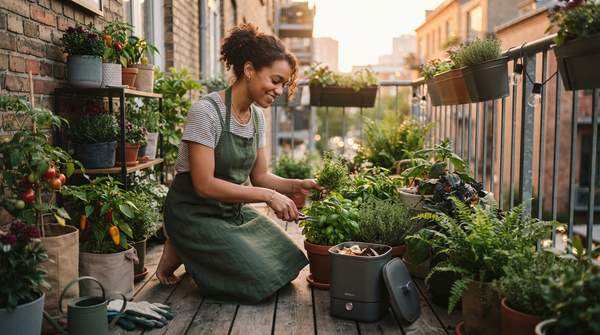
You don't own your home. You can't install solar panels or rip out the plumbing. Good news: you don't need to. Renters can cut waste, save water, and grow a thriving garden using low-cost, non-permanent actions.
That's the message behind the Matter of Trust Eco-Home in San Francisco, a model home and urban edible garden built specifically to showcase "accessible, convenient, and cost-friendly ideas for urban tenants." Its organizers point out that most residential sustainability advice targets homeowners and green construction, leaving renters out. This guide brings that renter-first approach together with gardening guidance from the Missouri Botanical Garden and the New York Botanical Garden's urban gardening resources.
Making Your Urban Home and Garden Sustainable: A Renter's Guide
Renting changes the rules. Anything permanent—fixed fixtures, structural changes, major installations—needs a landlord's permission. So the strategies here share three traits: they're cheap, they're removable, and they fit small spaces.
That's exactly the philosophy of the Eco-Home demonstration project, which presents planet-friendly solutions for renters and explores how urban tenants can impact climate change without major renovations. Its backyard features an edible garden alongside small structures like a tiny home and a chicken coop—proof that even compact urban lots can produce food and demonstrate reuse. The same logic scales down to an apartment balcony or a windowsill.
Waste Reduction Strategies for Small Spaces
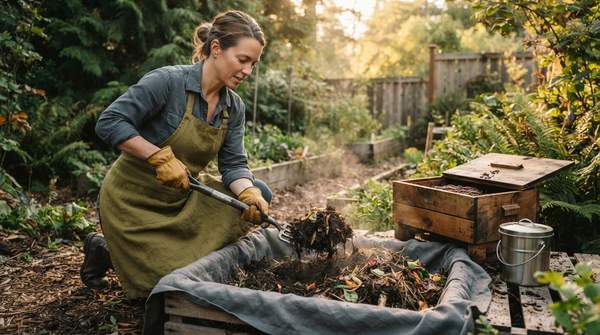
Writing for Ecobnb, Anna Castellini makes the key point: composting isn't just for homeowners. Renters can turn kitchen leftovers into useful plant food using small compost containers designed for cramped spaces. A worm composting bin under the sink or on a balcony works without permanent installation.
Recycling comes next. A strong recycling program improves environmental friendliness even in small areas, and labeled bins make sorting easy so nothing recyclable gets wasted. Finally, cutting back on single-use plastics delivers a large reduction in waste—no permission slip required.
Water Conservation in Urban Gardens
The Missouri Botanical Garden's sustainable gardening guidance starts with a simple rule: water plants only when they need it. Overwatering is the most common waste in small gardens.
Its first recommended practice is to conserve water and control runoff. A practical, renter-friendly tool is the rain gauge: set one up to record weekly rainfall so you know when your plants actually need watering. The Garden notes that lawns need only about 1 inch of rain a week—a benchmark that helps you avoid watering on autopilot. For containers, checking soil before watering costs nothing and saves water every week.
Smart Plant Choices for Confined Urban Spaces
The New York Botanical Garden's urban gardening guide is blunt about city conditions: low light levels and limited space often dictate plant choices. So choose tough plants that grow well in confined spaces.
Foliage and texture matter more in urban designs, where flowers may be sparse and space is tight. Containers are the renter's best friend—choose a suitable container for your location and move it when conditions or lease terms change. The guide also suggests a free research method: visit local parks and explore your neighborhood to see what thrives. Your block is a living catalog of plants proven to handle your exact light and climate.
Your Urban Sustainability Checklist for Renters
The checklist below sorts the practices by impact area and flags why each works for a rental. Every item is low-cost, non-permanent, and fits small spaces—no landlord permission needed.
| Area of Impact | Practice | Renter-Friendly Aspect | Benefit |
|---|---|---|---|
| Waste Reduction | Small-space composting (container or worm bin) | Fits cramped spaces; fully removable | Turns kitchen leftovers into plant food; diverts waste from landfill |
| Waste Reduction | Labeled recycling bins | Works in small areas; no installation | Ensures nothing recyclable is wasted |
| Waste Reduction | Cut single-use plastics | Free; habit change only | Large reduction in household waste |
| Water Conservation | Water only when plants need it; use a rain gauge | Low-cost tool, no fixture changes | Conserves water and controls runoff |
| Plants | Choose tough plants for confined spaces | Thrives in low light and limited space | Healthy garden despite urban conditions |
| Plants | Plant in containers | Portable; leaves with you when you move | Flexible growing without permanent beds |
Prioritize by ease: start with recycling bins and plastic reduction this week, add a compost container next, then layer in watering habits and plant choices as your garden grows.
The Benefits of Composting for Urban Gardeners
Why bother composting in an apartment? Urban agriculture consultancy Agritecture lists the payoffs. Less waste: what you would otherwise send to a landfill goes to a new, beneficial cause—your garden. Better soil: compost enriches it with valuable nutrients that help produce growth, and it helps the soil retain moisture, which pairs directly with your water conservation efforts.
It's also a natural fertilizer: because of its natural components, compost won't release toxic chemicals into your soil. And it's free—the only change is your routine of tossing scraps into the compost bin instead of the trash. For container gardeners, that moisture retention is especially valuable, since pots dry out faster than garden beds.
Start Small, Make a Big Impact
Urban residents, including renters, can significantly improve their home and garden's sustainability by adopting low-cost, non-permanent practices in waste reduction, water conservation, and plant selection. None of these steps require major renovations or landlord permission.
The measurable indicator of progress: increased adoption of small-scale composting, visible recycling efforts, and thriving container gardens with resilient plant choices. Start with one labeled bin and one compost container this week. Your first handful of finished compost—dark, crumbly, and free—is the proof your rental is becoming a sustainable home.