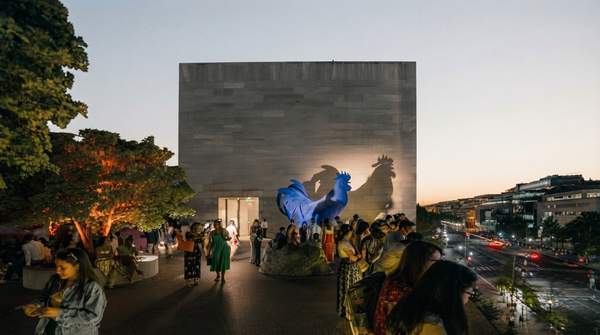
San Diego Mayor Todd Gloria’s proposed budget includes an $11.8 million cut to city arts programs, an 85% reduction that has prompted immediate rallies from the arts community. This drastic reduction threatens to silence local artists and dim the city’s vibrant cultural offerings, impacting countless events and institutions.
San Diego faces a substantial budget deficit, but the mayor's compromise budget selectively restores funding to some community services and increases spending in other areas, while arts and culture remain almost entirely defunded. This complex financial picture reveals a prioritization where cultural assets appear expendable.
Based on these budget decisions, San Diego appears poised to trade its cultural vibrancy for perceived fiscal stability and traditional services, potentially diminishing its unique identity and long-term appeal.
Mayor Todd Gloria's proposed 2026-27 fiscal year budget included significant cuts to arts and culture funding, which remained stubbornly in his revised budget, according to Kpbs. The initial draft proposed nearly $12 million in cuts to arts and cultural grants, a figure that signals more than just belt-tightening, according to the San Diego Union-Tribune. This isn't a temporary measure; it's a consistent mayoral policy choice to drastically reduce support for San Diego’s cultural sector, effectively abandoning investment in the city's creative economy. The complete $11.8 million cut represents a staggering 85% reduction. This isn't just a number; it's a deliberate move away from fostering a vibrant creative ecosystem, impacting everything from local artists to cultural institutions.
A City Without Culture?
Members of San Diego's arts community rallied, demanding the restoration of the $11.8 million cuts to city arts and culture funding, kpbs.org reported. This isn't just a niche concern; it's a clear signal of how deeply residents value their cultural programs.
Beyond arts-specific advocates, a broader coalition urged the council to restore funding for library services, recreation centers, bike lane teams, and $9.6 million in arts and culture grants, inewsource noted. This unified front from diverse groups proves these cultural programs aren't luxuries; they're seen as essential community infrastructure, now facing severe financial jeopardy.
The Mayor's Balancing Act
San Diego faces a substantial fiscal challenge, as the mayor's proposed budget aims to close a $146 million projected deficit, according to the San Diego Union-Tribune. This significant shortfall necessitated difficult decisions across various city departments.
Despite the deficit, a compromise budget proposal aims to restore $1.2 million for library hours and $1.7 million for recreation centers, the San Diego Union-Tribune reported. These funds came from strategic reallocations: $3 million from cutting middle manager jobs and $2.2 million from canceling a law enforcement contract for automated license plate readers. The city found the money for libraries and recreation, but arts funding remained on the chopping block. This isn't about scarcity; it's about choice, clearly marginalizing cultural investment. Even more tellingly, an additional $750,000 for the compromise budget was sourced from implementing two-officer units in the Police Department, according to the San Diego Union-Tribune. Funds were actively reallocated to specific services; arts and culture simply didn't make the cut.
Priorities Revealed: What Gets Funded (and What Doesn't)
The mayor's budget includes increased funding for police by $15 million and city maintenance vehicles by $12.7 million, according to inewsource. This significant investment in highly visible, tangible services contrasts sharply with the near elimination of arts funding.
This deprioritization isn't unique to San Diego. Mayor Wu in Boston also proposed a 27 percent cut to her FY27 arts and culture budget, the Boston Art Review reported. This isn't just local belt-tightening; it's a disturbing national trend where cities, facing budget pressures, consistently view arts and culture as expendable, while traditional services and other community programs get bolstered. The implication is clear: cultural vibrancy is increasingly seen as a luxury, not a necessity.
The compromise plan also added $750,000 to restore a small business program, $900,000 for community events, and $200,000 for a position promoting San Diego as a filming location, the San Diego Union-Tribune noted. These selective restorations, while good for their respective sectors, expose a fundamental disconnect: San Diego appears to be choosing to be a merely functional city over a truly culturally rich one.
The Long-Term Cost of Cultural Neglect
The sustained defunding of arts and culture risks eroding San Diego's unique identity, stifling local talent, and diminishing the city's appeal as a vibrant cultural destination. When cultural institutions struggle, the entire creative ecosystem suffers, from individual artists to supporting businesses.
The city's active reallocation of millions from other departments to restore specific services, while leaving arts funding nearly decimated, sends a stark message: cultural enrichment simply isn't a priority. This approach trades long-term civic identity for short-term fiscal optics, a dangerous bargain for any aspiring global city.
The mayor’s decision to boost police and city maintenance budgets by $15 million and $12.7 million, respectively, while simultaneously gutting $11.8 million from arts funding, reveals a profound misjudgment of a vibrant city’s holistic needs. This prioritization clearly values immediate, measurable impacts over the less tangible, yet equally vital, cultural infrastructure. The fallout will impact the city’s economic vitality and civic pride for years to come.
What strategies can arts organizations use to survive budget cuts in 2026?
Arts organizations facing these 2026 budget cuts must pivot aggressively. Diversifying funding streams is paramount: think increased private donations, corporate sponsorships, and non-municipal grants. Building robust community support and engaging in public advocacy, as already demonstrated by San Diego's recent rallies, remains crucial to proving their undeniable value. Collaborative projects with other local institutions could also pool resources, cutting individual operational costs and fostering resilience.
By Q3 2026, San Diego's cultural institutions will likely face significant operational challenges and potentially reduced programming due to the $11.8 million budget cut. The choices made in this budget cycle aren't just numbers on a ledger; they will irrevocably shape the city's artistic future, impacting local artists and cultural events for years to come.