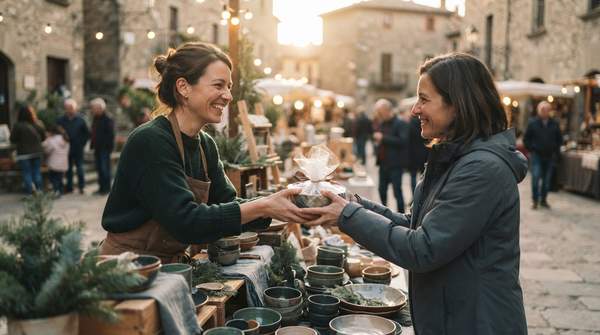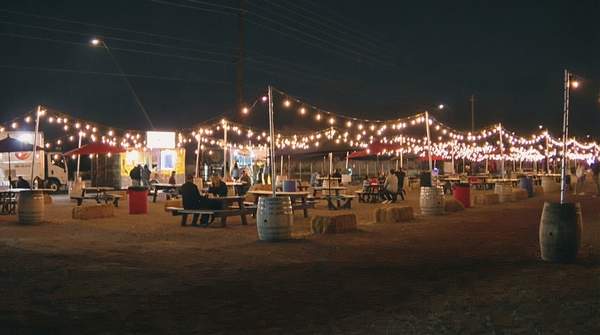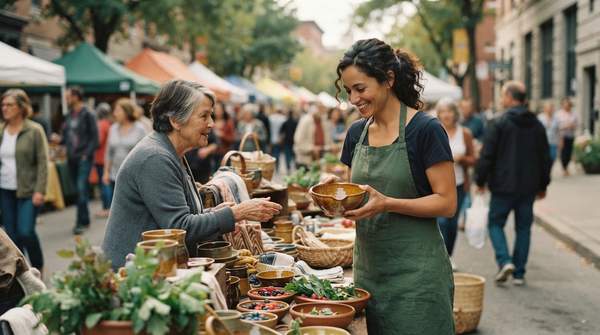
Local artisan markets come in three main temporary flavors: the weekly farmers' market, the seasonal craft fair, and the curated pop-up vendor market. Each has a distinct personality, vendor mix, and rhythm—and knowing which is which turns a vague "support local makers" impulse into a concrete plan. This guide compares the three types across shopping goal, vibe, vendor curation, and schedule so you can match your Saturday to what you actually want to buy.
Farmers' Markets: Freshness and Community
The farmers' market is the steady anchor of local market life. As market organizer Dreamers Markets describes it, a farmers' market is grower-based and runs a fixed weekly slot in the same location—often a dedicated lot or a closed street. Its main focus is fresh produce, growers, and prepared food, and because it repeats weekly, it functions as a grocery ritual rather than a special occasion.
The atmosphere is relaxed and community-oriented. The City of West Columbia, describing its own Meeting Street Artisan Market, captures the spirit: it's "more than just shopping… It's a community vibe—a chance to meet new people, support local businesses, and soak up that local spirit." West Columbia's events accept local makers alongside fresh-produce and locally prepared-food vendors, showing how farmers' markets can host artisans while keeping food at the center.
Choose a farmers' market when your goal is weekly essentials: seasonal produce, baked goods, and small-batch food, bought directly from the people who grew or made them.
Craft Fairs: Handmade Treasures and Artistic Expression
Craft fairs are usually one-time or annual events, often indoors at convention centers, fairgrounds, or recreation centers, and often ticketed. Their focus is handmade crafts and hobbyist goods, and many are juried: a panel reviews vendor portfolios months in advance, which raises the barrier to entry and shapes a craft-specific audience.
The scale varies widely. Sarah Yeo, writing for The Whimsical Repose, distinguishes small local community fairs—grassroots events organized by schools, churches, or neighborhood groups, featuring local vendors selling everything from handmade crafts to baked goods—from larger regional markets that draw vendors and customers from a wider area and run monthly or seasonally with a more polished, professional layout.
For shoppers, that range means the vibe can swing from calm, focused browsing at a small rec-center fair to festival energy at a big themed event. Either way, craft fairs are the place to go for one-stop holiday shopping, unique handmade gifts, and direct conversation with the artists themselves—especially at juried events where quality and originality have been vetted in advance.
Pop-Up & Curated Vendor Markets: Unique Finds and Dynamic Experiences
The pop-up market—what most people mean by "vendor market"—is a temporary, recurring event where a curated group of independent makers, artisans, and small food vendors sets up booths for a single day in a public space, then packs up. That temporariness is the point: each date feels like an event rather than an errand, and the lineup can be rebuilt from scratch for every venue and crowd.
Unlike craft fairs, curated vendor markets are recurring and mixed-category, moving between venues and dates rather than anchoring to one spot. The vibe leans toward festival energy, discovery, and a day out. Denver's 2025 calendar shows the pattern: the Jackalope Indie Artisan Fair featured original fashion, accessories, home decor, kids' goods, and art alongside chalk artists creating pieces onsite, while street fairs added live music, food, and drink to the handmade lineup.
Look for words like "juried," "artisan," and "handmade only" in an event's description—Main Street Collective notes these terms usually signal the organizer curates the vendor list for quality and cohesion, so your discoveries sit among complementary products.
Market Matcher: Find Your Ideal Artisan Experience
Here is the comparison at a glance. Match your shopping goal to the row that fits, then check the vibe and schedule to confirm the experience you want.
| Market Type | Best For (Shopping Goal) | Typical Vibe | Vendor Curation | Schedule & Location |
|---|---|---|---|---|
| Farmers' Market | Weekly fresh produce, local food, supporting growers directly | Relaxed, community-oriented; a weekly grocery ritual | Grower-based, produce-first; some artisan food and makers | Fixed weekly slot, same location (lot or street closure) |
| Craft Fair | Unique handmade gifts, seasonal or holiday shopping, collecting a specific craft | Shopping-focused and seasonal; calm at small fairs, festival energy at large ones | Handmade crafts; often juried, sometimes open registration | Often one-time or annual; convention centers, fairgrounds, gyms |
| Pop-Up / Curated Vendor Market | Discovery, a festive day out, diverse artisan products | Festival energy, entertainment, a day out | Curated, applied lineup of independent makers each date | Recurring but mobile; plazas, downtown districts, public spaces |
These are generalizations—plenty of markets blur the lines, and a single maker might be a perfect fit at one type and a poor fit at another. Specific rules, vendors, and schedules always vary by location and organizer.
Choosing Your Market: A Shopper's Guide
Start with your goal, not the event. If you need this week's vegetables, bread, or prepared food, head to the farmers' market: it's the only one of the three built around a dependable weekly slot, so you can shop on autopilot once you know the day and place.
If you're hunting for a handmade gift—especially around the holidays—look for a craft fair. The juried, craft-specific format concentrates artists in one room, and the one-time or annual calendar means planning ahead matters; popular fairs can be ticketed.
If you want a social outing with shopping attached, find a curated pop-up. The mixed-category lineup, entertainment, and rotating venues make it the most dynamic of the three, but the same energy means it's the least predictable—check each event's vendor list and location before you go, because the lineup changes every date.
One boundary worth naming: this framework covers temporary or recurring in-person markets. Permanent retail cooperatives and online marketplaces operate on different logic entirely, and flea markets—built around secondhand goods rather than handmade work—are a separate category.
Making Your Market Choice
To choose the best local artisan market, identify your primary shopping goal—fresh produce, unique handmade gifts, or a dynamic social experience with diverse makers—and then select the market type that aligns with that focus, typical vibe, and vendor curation. A successful visit is one where your expectations for product variety, atmosphere, and schedule are met or exceeded: you leave with what you came for, enjoyed the setting, and can plan the next trip because you know when and where that market type happens again. The measurable test is simple—did the market deliver on its type's promise? If the produce was fresh, the gifts were genuinely handmade, or the pop-up surprised you with makers you'd never found otherwise, you picked the right one.
Sources
- Craft Fair vs Vendor Market vs Farmers Market: What's the Difference? — Dreamersmarkets
- Meeting Street Artisan Market - City of West Columbia
- The Different Types of Craft Fairs: How to Choose the Right Event as a — The Whimsical Repose
- Meet Your Maker 2025 - Artisan Markets & Farmers Markets - In Good Taste Denver
- How to Pick the Right Vendor Market — Main Street Collective