Preparing garden beds for winter comes down to three moves: clear out spent and diseased plants, feed and test the soil, then protect everything with mulch or a cover crop. Do these in order, and you prevent pests and diseases from overwintering, stop erosion, and give your spring garden a head start. The exact technique shifts with your climate, though. A dry, windy Denver winter demands different protection than a standard freezing Zone 6 winter in St. Louis.
Why Winterize Your Garden Beds?
Winterizing is not just tidying. It is soil insurance. Matthew Clay, writing for NC State Extension's Wilkes County Center, notes that proper winterization of raised beds reduces soil erosion, prevents nutrient loss, suppresses weeds, and supports soil biology even while the garden rests.
The payoff compounds. Sarah Wilcox, writing for St. Louis Composting, frames it simply: winterizing protects the soil, improves fertility, and reduces your spring workload. Grow Northwest adds that fall soil building improves texture so beds absorb and hold water during the next growing season, while discouraging weeds, diseases, and pests. Bare soil, by contrast, gets compacted by winter rains and loses nutrients to runoff.
Your Winter Garden Bed Preparation Checklist
Work through the tasks below in sequence, from cleanup through protection. Each step builds on the last, so skipping early cleanup undermines later steps.
| Step | Task | Why it matters |
|---|---|---|
| 1 | Remove spent summer crops, weeds, and debris; discard diseased or insect-infested plants rather than composting them | Prevents pests, diseases, and pathogens from overwintering and reinfecting spring beds |
| 2 | Test soil to identify nutrient deficiencies and pH needs | Gives amendments months to work before spring planting |
| 3 | Till or turn the soil, then mix in organic compost | Improves airflow and drainage, disrupts overwintering pests, and replenishes nutrients used during the season |
| 4 | Apply a layer of organic mulch such as leaf mulch or oak bark mulch | Prevents erosion, retains moisture, and regulates soil temperature |
| 5 | Sow a fast-growing cover crop such as winter rye or Austrian winter peas | Protects soil, prevents weeds, and adds nutrients when tilled under in spring |
| 6 | Water perennials well in fall and mulch around their bases; give tender herbs and less-hardy plants extra protection | Insulates roots and carries vulnerable plants through freezing weather |
Cleanup: Removing Spent and Diseased Plants
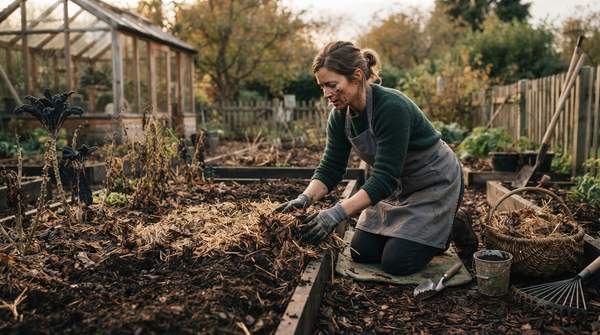
Start with removal. Wilcox advises pulling summer crops, weeds, and plant debris from beds, because clearing debris prevents pests and diseases from overwintering. Chop healthy plants into your compost pile, but discard diseased plants and weeds to keep the compost clean.
NC State Extension is even firmer on diseased material: discard it rather than composting it, to prevent reintroducing pathogens next season. Timing matters too. Denver Urban Gardens recommends waiting until after the first frost, then removing spent annuals and any diseased material.
One climate-specific nuance: in Denver's dry climate, leaving some organic matter behind, such as small leaves and healthy debris, naturally insulates and enriches the soil. Complete bare-earth cleanup is not always the goal.
Nourishing Your Soil: Testing and Amendments
Test before you amend. Wilcox recommends soil test kits available online or through local agricultural extensions. For the most thorough results, gardening writer Jo Ellen Meyers Sharp suggests contacting your local cooperative extension office for instructions on preparing a sample.
Fall is the smart season for this. Clay explains that a winter soil test gives you time to make amendments before the spring rush. Lime in particular benefits from several months in the soil, and NC State Extension recommends applying it well ahead of planting so it can adjust pH. If your report calls for lime or other amendments, use them now and lightly incorporate them into the top few inches of soil.
Then feed the bed. Till or turn the soil with a spade to improve airflow and drainage while disrupting overwintering pests, and mix in organic compost to replenish what the season used up.
Protecting Beds: Mulching and Cover Crops
Mulch is the workhorse of winter protection. Wilcox recommends organic options like leaf mulch, natural mulch, or oak bark mulch, which prevent erosion, retain moisture, and regulate soil temperature. One caution from her guide: avoid black walnut leaves, as they are toxic to most plants.
Cover crops take protection further. Sow fast-growing winter rye or Austrian winter peas, which protect the soil, prevent weeds, and add nutrients when tilled under in spring. Choose based on your goal: rye is a proven soil protector, while peas fix nitrogen.
For perennials and herbs, Wilcox advises watering well in fall and mulching around the bases to insulate roots. Hardy herbs like thyme need little protection, but tender rosemary should move indoors, and less-hardy oregano benefits from straw mulch. Leave coneflowers standing for winter birds, but cut back hostas to prevent disease.
Adapting Winterization to Your Climate
The checklist stays the same; the emphasis shifts. Denver Urban Gardens notes that Denver's high altitude, variable temperatures, and dry conditions make winter preparation different from other regions. In windy, dry winters, mulching with organic material is especially important because it reduces soil erosion, a common Denver problem. Leaving some organic matter on the ground helps insulate and enrich soil that would otherwise dry out.
In standard freezing zones like St. Louis's Zone 6, the priority is insulation against harsh freezes: mulch heavily, protect perennial roots, and heavily mulch around rose bases after the first frost. Hardy vegetables like kale, Brussels sprouts, and carrots can stay in the ground, often tasting sweeter after frost exposure.
Raised beds need extra attention anywhere. Meyers Sharp advises checking that soil under the frame has not eroded, shoring it up if needed, keeping corners square, and replacing rotted wood to prevent collapse and pest invasions. Watch drainage: if water pools for more than a day, loosen the soil or work in more organic matter. During freeze-thaw cycles, gently tamp down soil that heaves around plant roots.
Ensuring a Thriving Spring: Your Winterization Decision
By diligently following the winterization checklist and adapting tasks to your local climate, you will significantly enhance soil health, reduce pest and disease issues, and ensure a robust start for your garden in the spring.
How will you know it worked? Observe healthier soil structure, fewer overwintering pests, and earlier, stronger plant growth in the spring. Those three markers are your measurable proof that the fall effort paid off.
Sources
- Winterizing Your Raised Garden Beds - Wilkes County Center
- How to Winterize Your Garden — St. Louis Composting
- Methods of Winterizing your Garden — grow-northwest
- 5 Essential Steps for Putting Your Garden to Bed for Winter - Denver Urban Gardens — Denver Urban Gardens - Cultivating Food, Community, and Climate Resilience on a Human Scale
- How to Winterize Your Raised Garden Bed — Lawn Care Blog | Lawn Love