You can spend half an hour trying to write the first sentence of your epilepsy story and still be six years away from the moment you wanted to describe. You’re explaining the diagnosis, the timeline, and who was there, when the reason you sat down was that you couldn’t stop thinking about a bus ride after an appointment. Try writing the bus ride first.
Maybe what stayed with you was a conversation you kept rehearsing and never had. Maybe it was realizing halfway home that you’d left one question off the piece of paper in your pocket. Give that moment a few sentences and see what someone would need to know to understand why it outlasted everything else you remember about the day.
Write What You Can Put Back in the Room
Start with where you were, what you were doing, and what changed while you were there. If you remember looking through your bag for the piece of paper and finding an old grocery receipt instead, write that down. A detail belongs in the scene when it helps you recover what you were doing or thinking at the time.
Sometimes what you remember is exactly where your memory goes blank. If someone else told you what they saw during a seizure, make that part of the account. “My brother told me the kettle was still on” and “I remember the kitchen light when I opened my eyes” let each person’s memory do a different job. The gap between them may be part of what you’re writing about.
Give the Draft One Question to Follow
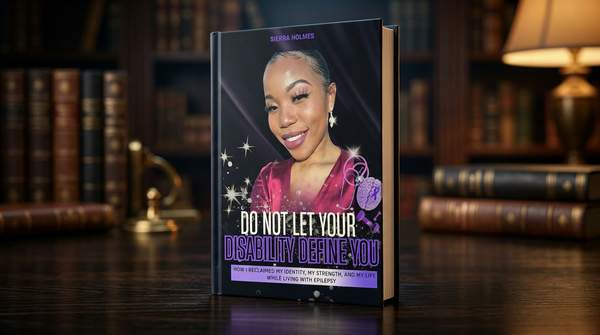
Sierra Holmes puts the subject of her account in the subtitle of Do Not Let Your Disability Define You. The ebook from Neuro-Dynamic World is subtitled How I Reclaimed My Identity, My Strength, and My Life While Living With Epilepsy. The condition gives Holmes’s story context, and the words she gives to what she wanted to reclaim tell you where she’s chosen to put the emphasis.
Try writing one private sentence about what your draft follows. “This is about the year I couldn’t explain why I missed my old plans” gives you a way to decide whether the bus ride belongs. So does “This is about the first time I told someone what I remembered.” Either sentence can change once you discover what the pages keep returning to.
Lay two scenes beside each other before deciding whether the draft needs a long introduction. If a moment from the year before gives the bus ride a different meaning, you’ve found a reason to go back in time. If the earlier scene sends the story toward a different question, save it for a draft where it has more room.
Use Your Notes to Give the Scene Context
A diagnosis date can carry weight if it changes what someone understands about the next scene. A string of dates and medication changes may belong in your notebook until one of them explains why you were waiting for a call or why you made a particular decision. Ask which detail helps someone follow what happened and then see how much you can convey without sending them through the complete timeline.
Madeline Bolton-Smith told the Epilepsy Research Institute that Diary of an Epileptic grew out of private notes. A notebook can be the place where you find out what you remember and check the order of events. A later draft gives you a chance to decide which parts of that material belong together and which parts you want to leave where you first wrote them.
Make a Separate Decision About Who Gets to Read It
Write a private draft before deciding whether it has an audience. You may need to set down a name, a difficult memory, or an argument in full to understand what you’re trying to say. Once the draft exists, you can decide how much of that material belongs in a version for a sibling, a writing group, or the public.
A name is only one way to identify someone. A job title, a small town, and the month something happened might be enough in combination. Before sharing a draft, see whether you can keep the part that carries the scene, such as what you asked and how the answer landed, while leaving identifying details in your private copy.
Read your last paragraph once more. You may find that the strongest ending is the moment you understood what you wanted to ask, even if the answer was still a few days away. A personal story can stop there and leave your life to continue outside the draft.
Frequently Asked Questions
Where do I begin if my epilepsy story spans years?
Pick one scene you can describe from memory or reconstruct from the notes you have. Once you’ve written it, place an earlier and a later moment beside it to see whether they develop the same question.
Should I name my seizure type?
Include it if it helps someone understand the scene and you’re comfortable sharing it. If the term is unfamiliar, plain language about what you experienced or what someone saw can give the scene enough context.
What if I remember a conversation but can’t recall the words?
Describe what you remember about the exchange without putting reconstructed dialogue in quotation marks. The expression on someone’s face, the question you meant to ask, or the part of their answer you recall can still give the scene shape.
Read One Story Before Returning to Yours
Give yourself one scene and one question to write toward. If you want to see what it looks like when an author gives one part of her experience a book of its own, read how Holmes introduces her subject at Neuro-Dynamic World. Get Do Not Let Your Disability Define You, then open your draft again and see which sentence sounds most like the story you sat down to tell.