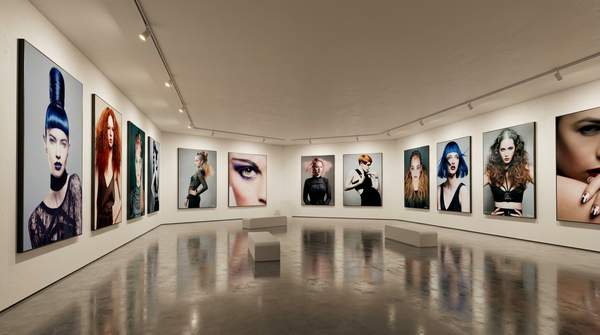
A visitor can begin encountering an artwork before they reach it. A piece glimpsed through an opening, a long wall that draws the eye towards another room or a quieter work placed after a visually dense section can all influence how an exhibition unfolds.
curate.tours gives artists and curators control over those spatial decisions inside a browser-based 3D exhibition platform. Custom floorplans, artwork placement, 3D staging and atmospheric lighting make the layout itself part of how a virtual exhibition communicates.
Think Beyond the Order of the Artwork
Curating a show often involves deciding which works belong together and which piece should appear first. A three-dimensional exhibition adds another question: what should visitors be able to see from where they are standing?
A work positioned at the end of a room can become a destination. Another might appear partly through a doorway, while a cluster of smaller pieces can encourage visitors to slow down before entering a larger space.
Those relationships create progression without requiring every visitor to follow an identical route. The architecture establishes visual cues, while the person moving through the exhibition still has room to pause, turn or investigate something that catches their attention.
Let the Floorplan Establish the Rhythm
curate.tours supports custom vector floorplans, so the exhibition does not have to begin with a fixed sequence of identical rooms. Walls and spaces can be arranged around the work and the experience the curator wants to create.
A long uninterrupted wall can suit a photographic series intended to be read in sequence. Separate rooms may work better when an exhibition contains distinct themes, artists or phases of a larger body of work.
Transitions can also change the pace. Moving from an enclosed section into a larger space can create a visual release, while narrowing the route can concentrate attention on a smaller number of works before the exhibition opens out again.